

Lip fillers have become one of the most popular ways to enhance lip shape and add volume. But achieving your desired results depends just as much on proper aftercare as on the treatment itself. Following the right steps in the hours, days, and weeks after your appointment helps your filler settle smoothly for results that won’t fade prematurely.
This guide walks you through everything you need to know about lip filler aftercare—what happens during a lip filler appointment, how to care for your lips afterward, expected side effects, and when to reach out to your provider.
What Happens During a Lip Filler Appointment
Especially if you’re new to lip fillers, knowing what to expect during your appointment is helpful so you can focus on enjoying the process and the results.
Consultation and Assessment
Every lip filler appointment at BodyLase begins with a detailed consultation to personalize our approach. This includes:
- Reviewing your goals (more volume, better symmetry, defined borders, or a subtle enhancement)
- Examining your natural lip anatomy
- Discussing filler options (we proudly offer JUVÉDERM® and Resilient Hyaluronic Acid, RHA, fillers)
- Reviewing your medical history and any medications that may impact bruising
Numbing Process
Most people find lip filler injections tolerable, and our goal is to make the process as comfortable as possible. Before treatment, your provider will clean the skin and apply a topical cream to numb the treatment area. Additional numbing options are available if needed.
Injection Technique
Once the treatment area has been cleansed and numbed, your provider begins placing the filler. Techniques vary based on your goals and natural lip structure. From subtle and natural to plump and juicy – your treatment will be customized to your goals!
Lip Filler Aftercare Instructions
Following proper aftercare for lip filler ensures smooth, even results. Here’s what to expect and how to care for your lips during the healing window.
Common Side Effects of Lip Fillers
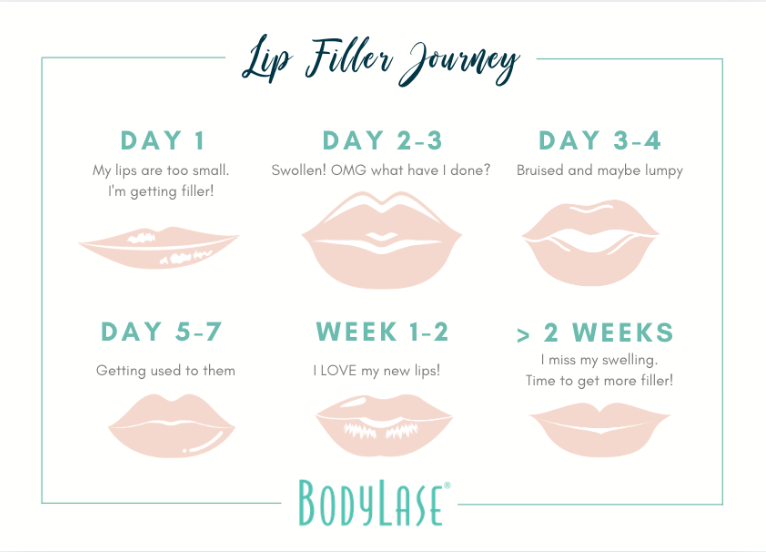
Side effects usually appear within the first 24–48 hours and improve quickly. Here’s what you might experience and what to do:
Swelling
Swelling is the most common reaction in the first 24 hours.
What to do:
- Avoid salty foods, which can increase swelling
- Apply an ice pack for 3-5 minutes at a time
- Keep your head elevated
Bruising
Light bruising is normal and varies from person to person.
What to do:
- Avoid blood-thinning medications unless prescribed by a doctor
- Avoid alcohol
- After 12 hours, you may gently apply makeup to cover visible bruising
Lumps or Firm Spots
You may feel small bumps under the skin while the filler settles.
What to do:
- Monitor lumps for a few days; they typically soften on their own
- Don’t massage unless instructed by your BodyLase provider
Itching or Tightness
Your lips may feel slightly tight or itchy as swelling decreases.
What to do:
- Take an over-the-counter antihistamine, as directed on the packaging
- Apply a gentle, fragrance-free moisturizer
- Avoid scratching or rubbing the lips
How to Get the Best Lip Filler Results
Proper lip filler aftercare in the first few days makes a big difference in how your lips heal and look in the long run.
First 24–48 Hours
This is the most critical post-treatment stage, as your lips are actively swelling and settling. Follow these lip filler aftercare instructions closely to support even, smooth results.
- Reduce Swelling With Gentle Cooling: Apply a wrapped ice pack—five minutes on, five minutes off—and keep lips moisturized with a gentle, non-fragranced balm. Sleep with your head elevated to avoid irritation at night.
- Avoid Touching the Lips: Try not to poke, press, or squeeze your lips. Even small amounts of pressure can shift filler before it integrates.
- Avoid Heat: Heat increases swelling and can interfere with early filler settling. Avoid hot tubs and saunas, excessively hot showers, and heated skincare tools.
- Avoid High-Intensity Exercise: Sweating and increased blood flow can prolong swelling. Light walking is fine, but avoid HIIT workouts, heavy weight training, or hot yoga.
- Avoid Straws: Prolonged straw use can interfere with results by distorting the shape of your lips.
- Avoid Alcohol and Blood Thinners: Alcohol, Aspirin, fish oil, and Vitamin E increase the risk of bruising and swelling. If a doctor has prescribed these medications, continue using them as directed.
- Stay Hydrated: Hyaluronic acid fillers attract water, so staying hydrated helps them settle smoothly and maintain volume.
Days 3–7
By day three, swelling begins to fade and the lips start to soften. You may still feel firmness in some areas, but this is normal.
- Gentle Skincare Around the Lips: It’s safe to resume your regular skincare routine, but avoid acidic or exfoliating products around the lip area. Avoid products such as retinol, glycolic acid, and salicylic acid, as well as facial waxing around the mouth.
- Avoid Lip Makeup: Lipstick, lip gloss, lip liner, and plumping balms should be avoided for at least 48–72 hours. Applying makeup too soon may irritate the lips or introduce bacteria.
- Massage Only If Instructed: Only massage the treatment area if your injector specifically instructs you to do so.
Long-Term Lip Filler Care
After your lips have healed, you can start forming healthy habits to help your filler last longer and keep your lips looking smooth and hydrated.
- Moisturize Daily: Use a nourishing lip balm to maintain hydration. Well-hydrated lips look fuller and retain filler better.
- Protect With SPF: Sun exposure breaks down hyaluronic acid faster. Use SPF lip balm and a zinc-based sunscreen near the lip area.
- Avoid Smoking or Vaping: Smoking or vaping accelerates filler breakdown and contributes to lip lines. Avoiding it helps your results last longer.
Expect Final Results in 1–2 Weeks
Most swelling fades by day three, but optimal results emerge in 1–2 weeks once the filler has fully settled. While lip filler longevity varies between 6-15 months, most clients schedule maintenance appointments every:
- 6 months when the goal is subtle hydration or shape
- 9–12 months for goals of fuller volume
When to Contact Your Provider
While side effects are usually mild, certain symptoms require immediate, professional attention. Contact your BodyLase injector if you experience:
- Severe or worsening pain
- White or pale patches on the lips
- The spreading of bruising and redness to other parts of the mouth
- Blistering or unusual discoloration
FAQs on Lip Filler Aftercare
How long do lips stay swollen after filler?
Mild to moderate swelling is normal for the first 24–72 hours. Most people see swelling peak within the first day and then steadily improve. Your final lip shape becomes visible within 1–2 weeks, once the filler fully settles.
Can I work out after lip filler?
Avoid exercise for 24–48 hours after treatment. Increased blood flow can worsen swelling and bruising. Light walking is fine, but delay high-intensity workouts until swelling has resolved.
Can I take Tylenol after lip filler?
Yes. Acetaminophen (Tylenol) is generally safe to take for discomfort. Avoid NSAIDs like ibuprofen or aspirin, unless prescribed, since they can increase bruising.
Support Your Best Lip Filler Results
Lip filler aftercare is essential to achieving the soft, smooth, natural-looking results you want.
If you ever have questions during healing—or are considering getting lip fillers for the first time—BodyLase’s experienced providers are here to help. From customized treatment plans to safe, high-quality aftercare guidance, you’re supported every step of the way.
Learn more about lip fillers at BodyLase, and request a consultation today.